There are many ways in which we use our communal voices to strengthen our relationship with God. We will look at three very different instances of using our voices for Tikkun Olam, repairing our world, while imploring God to hear us and support us.
Sunday | November 22 | 12:00 pm ET | Zoom
Our voices form such an integral part of our worship, through singing, talking, and studying. But what about those among us who are non-speaking? We will look at how, using new technological advances, we can enable those who are non-speaking to fully engage in religious life.
Guest Speakers:
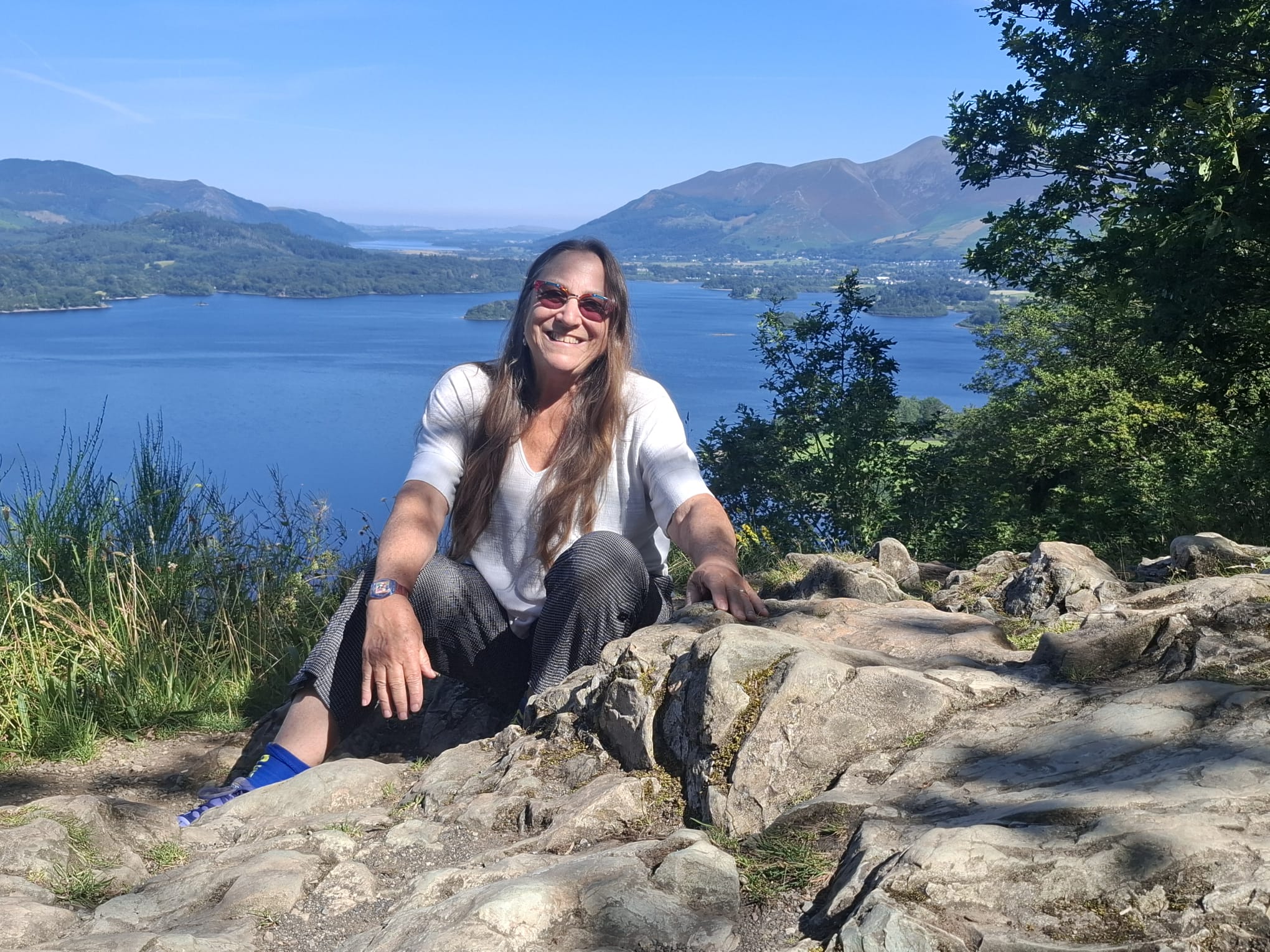
Rabbi Judith Edelman-Green is an innovative, creative and visionary Jewish educator with a M.A. from Schechter Institute in 1994 and Rabbi who was ordained at Hebrew Union College in Jerusalem in 2009.
Rabbi Judith works at Tel Hashomer Hospital in Spiritual Pastoral Care as a Rabbi-Chaplain. There she works in comforting, supporting and uplifting patients, families and staff in hematology-oncology. She pioneered Spiritual Pastoral Care in Covid Units at Tel HaShomer. She works with those of all religions and backgrounds. Her courses on examining the Meaning of Life and Death from a Jewish perspective using creative means and text study have been taught in conjunction with two Reform Congregations in Israel, in Day Centers for the elderly and are being compiled in a book on Spiritual Pastoral Care.
Judith founded and directed the program “ Bar- and Bat-Mitzvah Program for Children with Special Needs” in 1995, run in conjunction with the Masorti Movement, has reached thousands of children annually from the north to the south of Israel, touching and influencing constantly widening circles within Israeli society. She directed and expanded the program for 10 years.
Rabbi Judith served as the Rabbi of the Jewish Reform Union in Mumbai India during the last ten years for Bene Israel Jews. She leads services with guitar, blowing the shofar, reading Torah and Haftorah and giving sermons. She has also served as Rabbi in Mbale Uganda with the Abayudaya Jews.
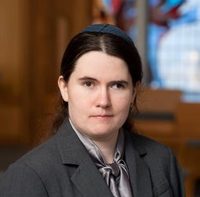
Rabbi Ruti Regan is a feminist rabbi and disabled disability advocate working at the margins of Jewish community. She is a prominent rabbinic voice, known for her work about the intersection of disability and Jewish text, thought and practice. She researches inclusive liturgies and ritual change. Now a consultant with Matan, she previously served as their Rabbinic Disability Scholar in Residence. She also leads a long-running #ParshaChat Torah study group on Bluesky, and is the author of the realsocialskills.org blog. Rabbi Regan was ordained at the Jewish Theological Seminary in 2017, and previously studied at the Drisha Institute for Jewish Education and the Conservative Yeshiva in Jerusalem.
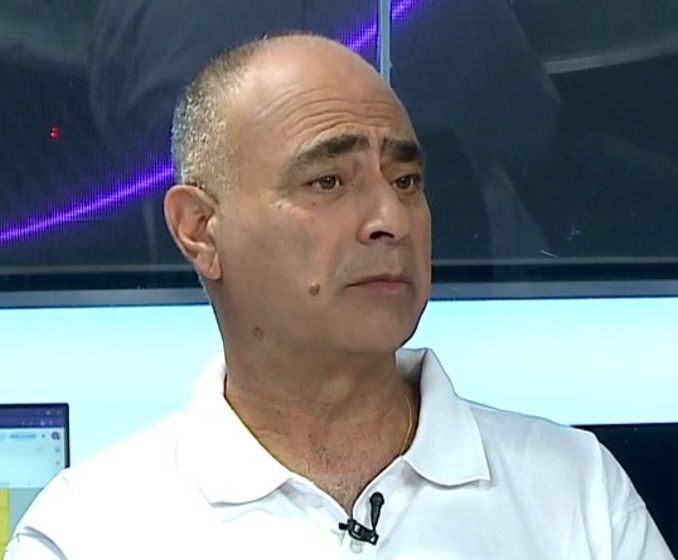
Dror Levy is an entrepreneur and technology executive with a background in communications technology, product development, and business development.
His experience in technology, combined with a strong personal drive to create meaningful change, led him to develop BarVox, an innovative AI-based solution designed to help people with speech and pronunciation challenges communicate using their own voice and personal way of speaking.
By learning each individual’s unique pronunciations, BarVox translates their speech into words that others can understand, helping create more natural communication, independence, and inclusion.
He took an idea inspired by a real-life need and used his technological knowledge, business experience, and determination to turn it into a working solution with the potential to assist many people around the world. BarVox is already being piloted with individuals and healthcare and disability organizations in Israel, and they are beginning to expand internationally.
He is especially passionate about sharing this technology with women who are working to create change in their communities, and about inspiring them to see how innovation can help ensure that every voice is heard, understood, and valued.
Orly Ziv-Maxim is a speech-language pathologist with extensive clinical experience supporting individuals with diverse communication disorders. Her expertise centers on speech and language development, augmentative and alternative communication (AAC), and communication strategies for individuals with autism.
Currently serving public school students in Blaine, Washington—a community located on the U.S.-Canada border—Orly is dedicated to empowering students to find their voices and connect with the world around them.
Her passion for innovative communication solutions led her to join BarVox as a consultant, where she contributes her expertise to the development of technology designed to help individuals be heard and share their thoughts and ideas. Orly’s work is guided by the belief that every person deserves access to effective communication tools and the opportunity to fully participate in their communities.
Judy Chinitz is the founder and director of Hand to Mouth Learning Center, in Westchester, NY, which provides both individual communication instruction, and social, recreational and educational opportunities for the nonspeaking. She is a New York State licensed Special Educator and the founder of the Typing for Communication (T4C) methodology.
Judy holds Master of Science degrees in both special education and nutrition, and has been actively involved in the world of autism, both biomedically and educationally, since her son, Alex, was diagnosed over 30 years ago. She has authored numerous book chapters, articles and her own book on diet (We Band of Mothers: Autism, My Son and the Specific Carbohydrate Diet).
Born in Australia and the granddaughter of Holocaust survivors, Rena Roberman grew up with an international perspective, having lived in several countries through her family’s diplomatic postings. She made Aliyah to Israel, served in the IDF and earned two degrees from Tel Aviv University in Architecture and Interior Architecture.
A successful real estate professional specializing in Caesarea, Rena is also a passionate advocate for the rights of non-speaking autistic individuals.
Together with her husband, Eran, she founded Freedom of Expression, an Israeli nonprofit dedicated to making communication accessible to all, based on the belief that communication is a fundamental human right.
Rena is a qualified Type to Express practitioner, having successfully completed the comprehensive 18-month professional training program led by Yael Cohen at Seminar Hakibbutzim Teachers College in Tel Aviv, with hands-on experience working with non-speaking autistic individuals.
Rena was instrumental in initiating the establishment of Merchavim Center, owned and managed by senior Type to Express practitioners Chen Lev Avganim and Alon Binovitch. The center brings together non-speaking autistic children, teenagers and adults from across Israel for learning, communication through typing, social interaction and meaningful friendships.
She founded and leads the Freedom of Expression community in Israel, connecting over 700 families, educators and professionals, as well as the international Global Non-Talking Autistic Community, promoting worldwide collaboration and advocacy.
Rena and her team won third place at Hackautism 2025 with MYVOICE and first place in 2026 with EYETYPE, innovative AI-based technologies designed to advance communication and independence.
At the heart of her journey is her 12-year-old son, Dan, who is non-speaking and communicates through typing.
For Rena, motherhood, professional life, community building, technology and advocacy are deeply interconnected, driven by a vision of a more accessible and inclusive world for Dan, his friends and the global non-speaking autistic community.
Her guiding belief is simple:
The ability to speak should never be mistaken for the ability to think, understand, learn or communicate. Communication is not a privilege, it is a fundamental human right.
Dr. Gila Vogel grew up in New York. She has a BA in psychology from Barnard College, a MS in special education from the Ferkauf Graduate School of Education and a BHL from the Jewish Theological Seminary. She spent many summers at Camp Ramah both as a camper and a member of the staff. Gila directed the Tikvah program at Camp Ramah in Wisconsin in the 1970s. She was the Director of Special Education at the Bureau of Jewish Education of Southern New Jersey.
In 1980, Gila and her husband Rabbi Dov Vogel came to Israel on Aliyah. She was a senior lecturer and headed the special education department at Beit Berl College. She was one of the founders of the Bar/Bat Mitzvah Program you will be hearing about and has remained active in the program over the past 30 years. Gila received her PhD from Haifa University. Her dissertation was entitled “Shehekhyianu V’’Kiy’mau V’h’giyanu Laz’man Hazeh: The Significance of a Bar/Bat Mitzvah Ceremony for Children with Developmental Disabilities and their Parents. She is a member of the committee that produced the accessible Siddur – Bechol Drachecha.
Gila and Dov are active members of Hod V’Hadar, the Masorti (Conservative) synagogue in Kfar Saba. They were also active in establishing the Tali School in Hod Hasharon when their 3 children were youngsters. Today, they are the proud grandparents of 9 grandchildren, ranging in age from 8 to 21.
Gila is one of the founders of a website entitled Kol Kore. This bilingual site features recordings of all the Haftarot and Maftir portions (by women), explanations about how to teach Torah reading, and much more. It is available on the website of the Masorti movement (www.masorti.org) or at www.kol-kore.org.
If you are a member of Women's League, register for Session 2 here:
If you are not a member of Women's League, register for Session 2 here:
Sunday | December 20 | 12:00 pm ET | Zoom
This year we celebrate the 40th anniversary of the first ordination of women cantors at JTS. We will look at the halachic process involved in bringing that to fruition, as well as how the role of cantor has changed over time. We will also speak with some Israeli women who serve as shlichot tzibbur (prayer leaders) in their Masorti congregations.
Guest Speakers:
Cantor Erica Lippitz was one of the first women to be invested as a Cantor by the Jewish Theological Seminary of America in 1987. Raised in Chicago in a family of educators, social activists, feminists, and musically creative spirits, she is also a graduate of the University of Michigan School of Music and the Hornstein Program in Jewish Communal Service at Brandeis University.
She served for 34 years as Hazzan of Oheb Shalom Congregation in South Orange, New Jersey from 1987-2021, where she now holds the title of Cantor Emerita. Prior to that time, she served as cantorial soloist for Congregation Beth El of Sudbury Massachusetts, and for the Jewish Reconstructionist Congregation of Evanston, Illinois.
The camaraderie and support of the Cantors Assembly has meant the world to her throughout her career. She was honored by the CA with the Yehudah Mandel Humanitarian Award (2013), the Hazzan Moshe Nathanson Award for Conducting (2018), and the Yuval Award (2018).
Jewish choral art has been a lifelong passion for Cantor Lippitz, who sang with Zamir Chorales of Boston and New York and was deeply inspired by their conductors. She was co-founder of the Kol Dodi Chorale of Greater MetroWest, NJ and the NJ interfaith choir, “Voices in Harmony.” For over ten years, she co-directed “Shir Joy,” a one-day choral festival for synagogue choirs, who gathered at JTS. Cantor Lippitz has taught annually at the North American Jewish Choral Festival. In Chicago, she co-created the 2024 “Shir Ruach” open community sing. Her life’s mission has been to create caring communities with spirited music as their core.
As a member of the folk-singing group “Beged Kefet,” Cantor Lippitz recorded three albums that raised thousands of dollars for tzedakah. She also performed and recorded with Kol Sasson, Kol B’Seder and Rabbi Joe Black. She was coordinating editor of the most recent editions of both the Shabbat and weekday Shironim for the National Camp Ramah movement.
If you are a member of Women's League, register for Session 3 here:
If you are not a member of Women's League, register for Session 3 here:
Sunday | October 11 | 12:00 pm ET | Zoom
The Shoah (Holocaust), October 7, and September 11 – three of the most traumatic events of modern history. We will hear personal stories from both Israeli and American survivors of these events and learn how important it is to preserve their stories for future generations.
Guest Speakers:
Ordained in 2007 by the Schechter Rabbinical Seminary, Rabbi Rowen Baker has served, since her ordination, as the rabbi of Kehillat Ramot-Zion in French Hill, Jerusalem. Ramot Zion, a flagship Masorti congregation, is home to many Israelis in search of a meaningful connection to Jewish tradition in a rapidly changing world.
Much of Rabbi Rowen Baker’s work was done outside of the synagogue space, with individuals who were not accustomed to synagogue life, so as to make a vibrant Jewish approach and practice accessible in all different aspects of life.
She holds an M.A. with Distinction in Talmud and Jewish Thought from The Schechter Institute, and a B.A. in Jewish History and Archeology from the Hebrew University of Jerusalem. She is a fellow at the Honey Foundation for Israel and a member of the Rabbinical Assembly Executive Council. In 2015 she was the first Masorti rabbi – and the first ever female rabbi – to be invited to teach Torah at the Israeli President’s residence.
Rabbi Rowen Baker lives in French Hill, Jerusalem with her husband Etai, their four children and their dog Hummus.
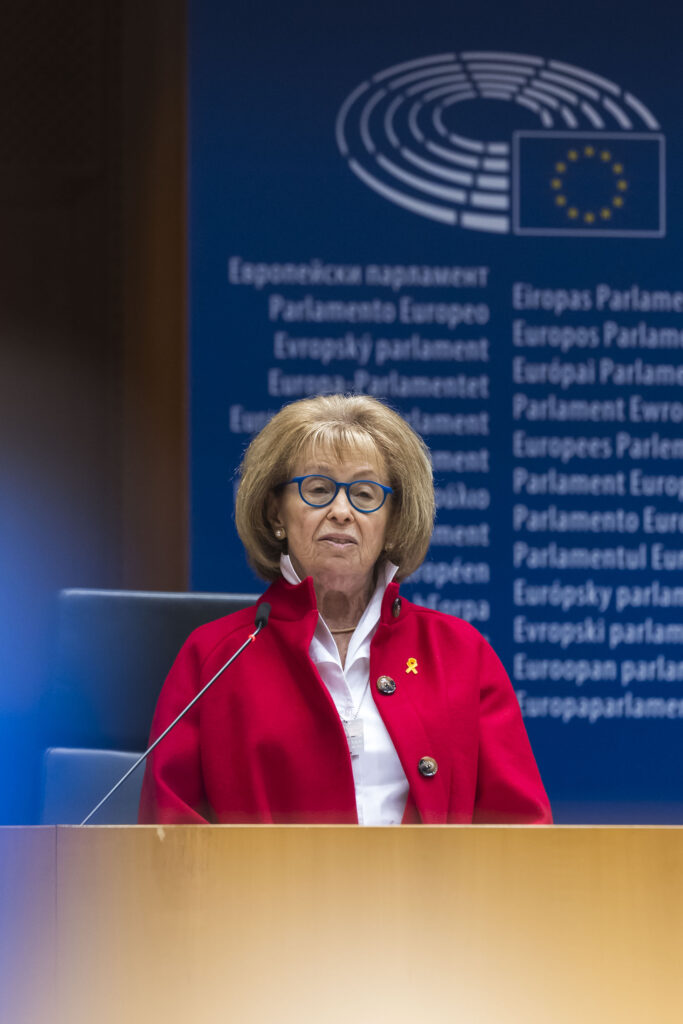
Irene was born in Poland in 1937 and deported to the Warsaw Ghetto with her family at the age of five. Her father was murdered by the Nazis, and after four years in the ghetto, her mother managed to flee to Paris with Irene. She studied in the US and moved to Israel at the age of 25, where she became the youngest professor at the Hebrew University. She recounts her experiences in her book “I Won Against Hitler.” Irene Shashar spoke before the European Parliament in 2024 on the occasion of the official commemoration of January 27 and in 2020 at the United Nations headquarters in New York.
Leni Wesley was born in the Netherlands in 1936. She survived the Holocaust in hiding. In 1971, she made Aliyah with her husband and three children from Denver, Colorado. Leni is a graduate of social work and psychotherapy. She has worked at Shalvata Hospital in Hod Hasharon, Israel, as well as a private practice for over 40 years. She is a grandmother of nine children and one great grandchild.
Asher Gendelman is a native Washingtonian and the son of two Holocaust survivors. After a distinguished 40+ year career leading sales and marketing initiatives across the healthcare, defense, and critical infrastructure sectors, he is retired and happily devotes his time to his grandchildren, volunteer work, and traveling. Asher uses his expertise as a seasoned communicator and presenter to empower other 2Gs to articulate and share their families’ stories of survival and resilience.
Sandy Goldwasser Berenbaum was born in 1946 in a Displaced Persons Camp in Pocking, Germany. Her parents were Holocaust survivors who endured unimaginable hardships during World War II. Her father, originally from Mlawa, Poland, was a prisoner in a Nazi slave labor camp in Komi SSR, Siberia, while her mother was from Kiev, Ukraine (formerly part of Russia).
Determined to build a new life, her father led the family to the American sector in Germany, facilitating their emigration to the United States, where his only surviving brother lived.
In 1949, at the age of 2 1⁄2 years, Sandy arrived in the U.S. with her family. They landed in Boston, later traveled to New York, and eventually settled in Brooklyn. The family arrived with very little and lived in a boarded-up storefront with windows painted black for privacy. Despite their hardships, her parents attended night school to learn English, laying the foundation for a better future.
Sandy later married her husband, Dave, and settled in Philadelphia, where she became a devoted member of the Jewish community. She is a member of Congregation Tifereth Israel of Lower Bucks County and an international board member and consultant for Women’s League for Conservative Judaism. In addition to her international work, she actively supports her local community, serving on the Shared Meals Committee to help feed the food-insecure population in Lower Bucks County.
Sheila Kaufman is an immediate Past President of the Garden State Region of WLCJ. Currently she is on the WL Board of Directors Region Services and has spent the last 20 or so years on the Region/Branch board in different capacities. And has been quite active with her synagogue sisterhood. Sheila has been employed for the past 36 years at the Port Authority of NY & NJ, Architectural Unit in the Engineering Department as a Senior Graphic Designer, working on Wayfinding and Signage programs as well as producing reports and organizing architectural photoshoots. She is a survivor of both WTC bombings, February 1993 and 9/11 in 2001. She lives in NJ with her husband of 33 years, Stu. They have two adult children and a rescue dog named Bailey.
Margie Miller is a past International President of Women’s League for Conservative Judaism. She has served as a vice president of Mercaz, and as a board member of JTS, Ziegler, United Synagogue and American Friends of Neve Hanna. Margie is a Women’s League consultant and Region Advisor. She was a Lead Trainer at 26 Leadership Institutes, was the Women’s League 2014 Convention Chair, and was a delegate to the World Zionist Congress in Israel in 2023.
3080 Broadway, Suite K900, New York, NY 10027 | Phone: 405-870-1260 | info@wlcj.org
Copyright © 2026 Women's League for Conservative Judaism. All rights reserved. | Terms of Use | Privacy Policy | Website by Addicott Web